How to keep your child safe online
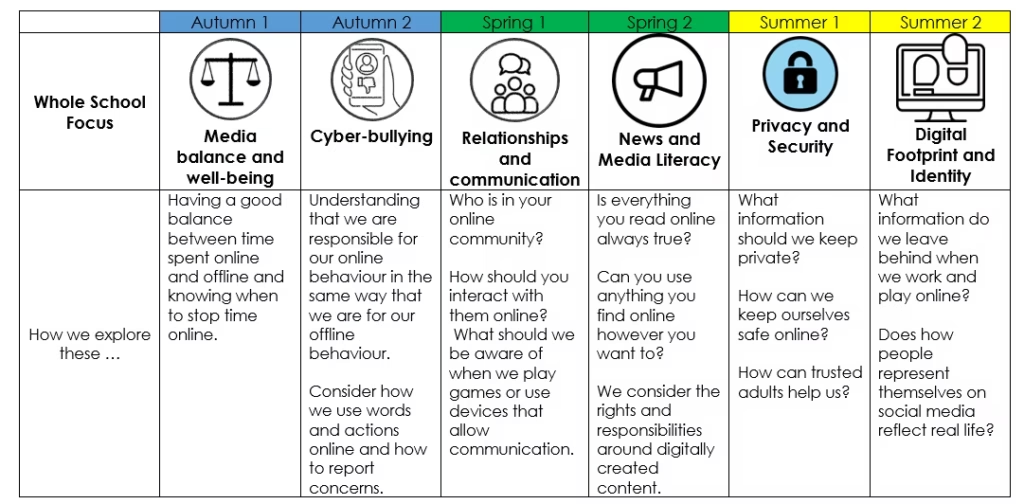
At Lantern Kane we believe that educating our children about being safe online is very important. As part of our Computing curriculum, all children from Foundation Stage to Year Six follow our Online Safety scheme of work focusing on identifying some of the risks about being on-line and how to keep themselves safe.
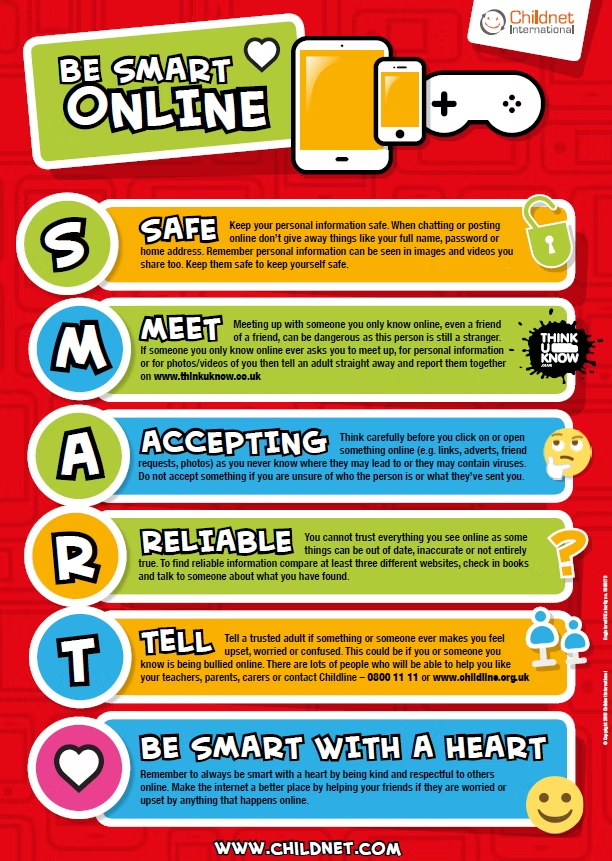
In school we have clear online safety rules which we discuss with pupils and families and encourage them to use at home and school. These are displayed around school and regularly discussed with the children by their class teachers.
The internet is like a magician’s hat. It’s full of exciting things to discover and kids love it. But while they seem to know what they’re doing, sometimes their parents don’t – and that can be a worry.
So what can you do?
- Explore Understand the apps, games and sites your child uses and get to know your child’s online world better.
- Talk -Chat to your child about their online world, just as you’d ask about their day at school.
- Agree – Set out the family rules to live well online. Discuss and agree ground rules and make sure you’re a good role model. You can download our suggested family agreement below.
- Manage – Make the technology work for you. Adapt privacy settings and use parental controls where necessary.
There’s lots of information online, but we’ve listed a few of the best sites to get advice from. If you’d like any help or if something is worrying you online, get in touch via ClassDojo, email office@lanternlane.notts.sch.uk or call 01509 820112.